

High‑Toughness Matrix High‑Speed Steel TGR33
I. Product Overview and Market Positioning
Market Positioning: Positioned as a dedicated die steel for high‑toughness warm forging / hot forging applications.
Among matrix high‑speed steels, TGR33 offers the best toughness, combining the red hardness and wear resistance of high‑speed steel with the fracture resistance of hot‑work tool steels. It addresses the common pain points of traditional hot‑work steels (softening at elevated temperatures) and conventional high‑speed steels (susceptibility to chipping and fracture).
Available sizes: Product: round bar; Specifications: 70‑350 mm diameter.
II. Chemical Composition and Technical Characteristics

Developed in reference to Hitachi's YXR series grades, featuring a low‑C, Mo‑W‑V alloy system.
High Toughness: The low‑carbon design of the matrix high‑speed steel reduces coarse eutectic carbides, resulting in impact toughness far superior to that of conventional SKH51 (M2) high‑speed steel. It exhibits outstanding resistance to chipping, fracture, and thermal cracking.
Excellent Red Hardness: The Mo‑W‑V composite alloy provides significantly better hardness retention than H13 (1.2344 / SKD61) under warm working conditions of 300‑600°C. It resists high‑temperature softening, collapse, and plastic deformation.
III. Main Application Areas
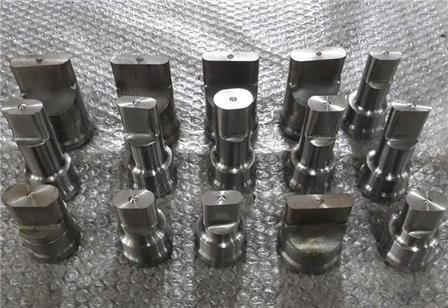
1. Warm / Hot Forging Punches – the mainstream application for TGR33, used for forging punches and dies in automotive component manufacturing.
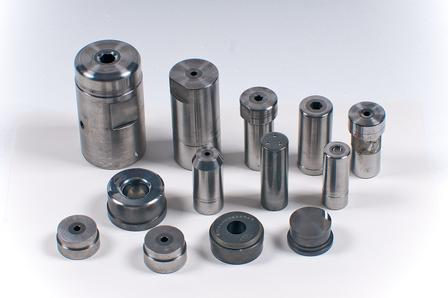
2. Cold Forging Dies – including cold forging molds, cold extrusion dies, and punches.
IV. Substitution Advantages over Other Grades

V. Annealed Microstructure of TGR33

VI. Heat Treatment Hardness Curve of TGR33
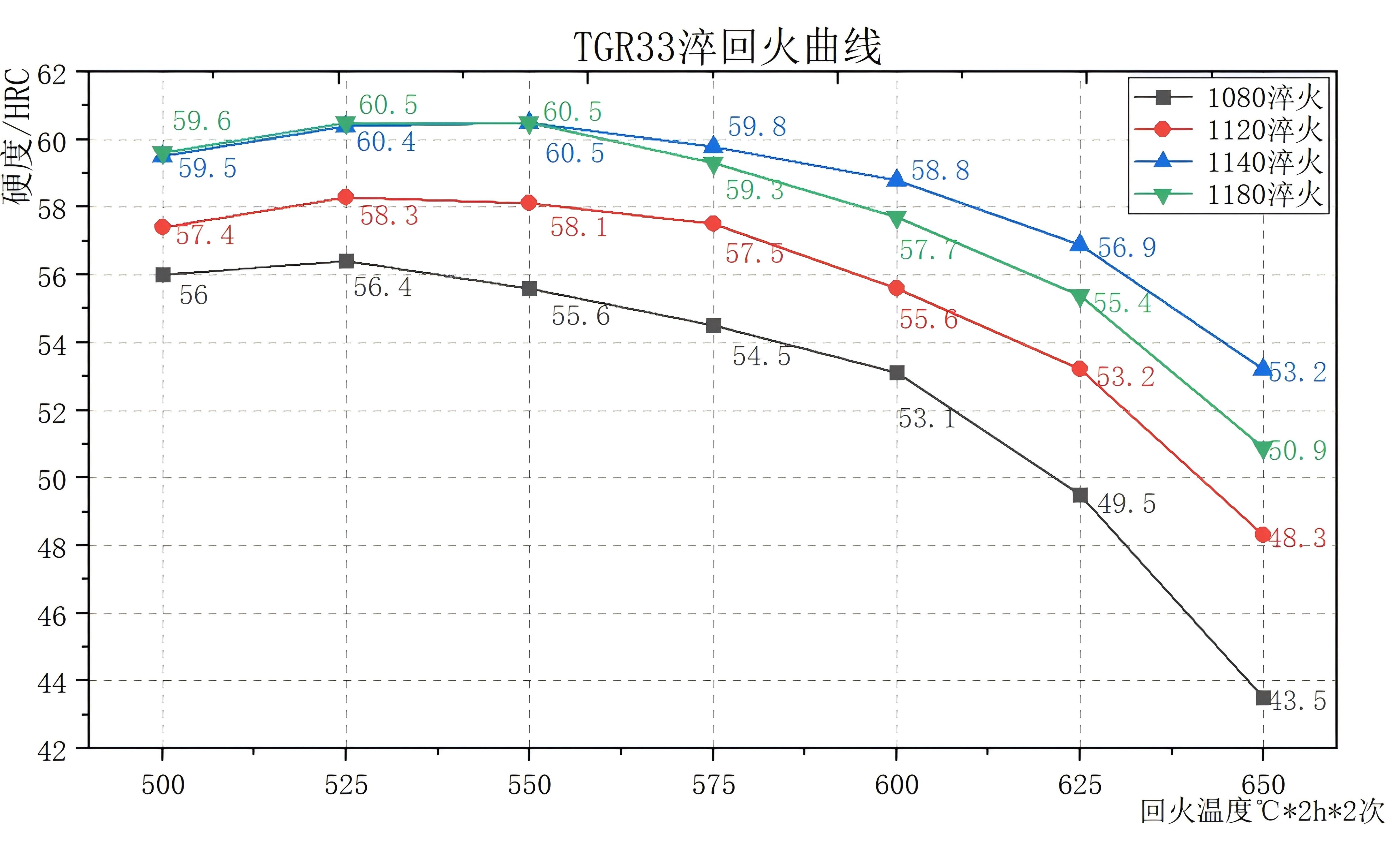
Quenching at 1080°C gives a hardness of 60.5 HRC. Tempering at 580‑600°C for 2 hours, twice, results in a hardness of 56‑59 HRC, which maintains the optimal toughness range.

Recommended heat treatment process for customers: Quenching at 1060‑1080°C, followed by tempering at 580‑600°C.